


- All
- Product Name
- Product Keyword
- Product Model
- Product Summary
- Product Description
- Multi Field Search

Views: 99 Author: Site Editor Publish Time: 2023-09-19 Origin: Site
DIN rail terminal blocks are used to connect electrical wires and cables in a variety of applications. They are designed to be mounted on a standard DIN rail, which is a type of metal rail used to mount and organize electrical components in control panels, switchboards, and other industrial settings. There are several ways to install DIN rail terminal blocks, depending on the specific application and requirements of the installation. In this article, we will discuss some of the different methods of installing DIN rail terminal blocks.
Snap-on installation: Snap-on installation is the most common way of installing DIN rail terminal blocks. In this method, the terminal block is simply snapped onto the DIN rail. The terminal block has a spring clip mechanism that locks onto the DIN rail, making it easy to install and remove. Snap-on installation is quick and easy, and does not require any tools. However, it may not be as secure as other methods of installation, and may not be suitable for applications that require high vibration resistance.
Screw mounting: Screw mounting is another common method of installing DIN rail terminal blocks. In this method, the terminal block is mounted onto the DIN rail using screws. The terminal block has mounting holes that are used to secure it to the DIN rail using screws. Screw mounting provides a more secure connection than snap-on installation, and is suitable for applications that require high vibration resistance. However, screw mounting requires tools and may take longer to install than snap-on installation.
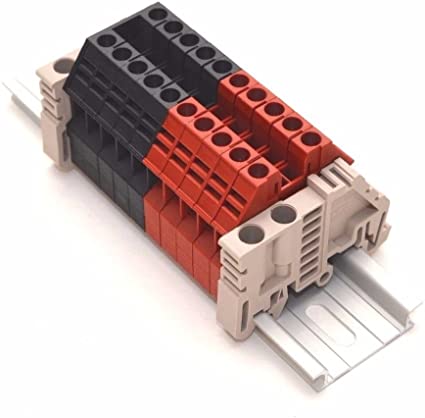
Adhesive mounting: Adhesive mounting is a method of installing DIN rail terminal blocks that does not require screws or tools. In this method, the terminal block is mounted onto the DIN rail using an adhesive backing. The adhesive backing is typically a double-sided tape that is applied to the bottom of the terminal block. Adhesive mounting is quick and easy, and does not require any tools. However, it may not be as secure as other methods of installation, and may not be suitable for applications that require high vibration resistance.
Hook mounting: Hook mounting is a method of installing DIN rail terminal blocks that uses a hook to secure the terminal block to the DIN rail. In this method, the terminal block has a hook on the bottom that is used to attach it to the DIN rail. Hook mounting is quick and easy, and does not require any tools. However, it may not be as secure as other methods of installation, and may not be suitable for applications that require high vibration resistance.
Push-in installation: Push-in installation is a method of installing DIN rail terminal blocks that does not require screws or tools. In this method, the terminal block is simply pushed onto the DIN rail until it clicks into place. Push-in installation is quick and easy, and provides a secure connection. However, it may not be as secure as screw mounting, and may not be suitable for applications that require high vibration resistance.
In conclusion, there are several ways to install DIN rail terminal blocks, each with its own advantages and disadvantages. The choice of installation method will depend on the specific application and requirements of the installation. Snap-on installation is the most common method and is quick and easy, but may not be as secure as screw mounting. Screw mounting provides a more secure connection, but requires tools and may take longer to install. Adhesive mounting, hook mounting, and push-in installation are all quick and easy, but may not be as secure as screw mounting and may not be suitable for applications that require high vibration resistance.


